

Fintech can accelerate the pace at which the GCC addresses its estimated US$250 billion SME financing gap by using AI to build more scalable, informed and inclusive financial solutions.
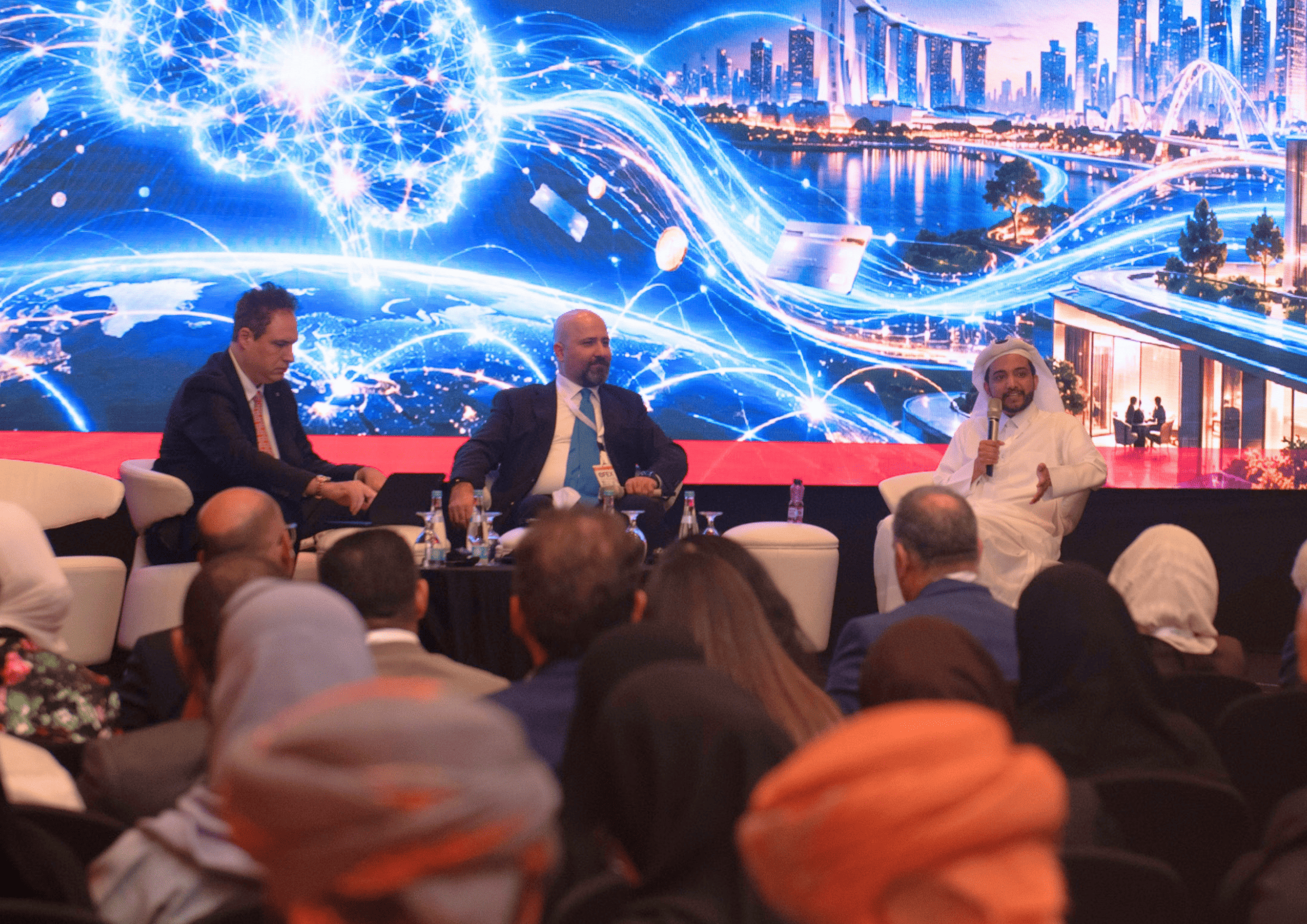
This was the message shared by Rashid Al-Derham, Co-founder and CEO of Qatar-based invoice financing platform Madad, during the QFEX: Qatar FutureFinance, AI & Connectivity Summit 2026, held at Hilton Doha on September 29. The panel, titled “AI Native Financing: Reinventing banking, payments, and financial services,” also featured Dr. Halmat Ahmed Omer of Erbil Bank as a panelist and Mert Dedebas of Frankfurt School of Finance & Management as moderator.
The discussion explored how AI-native finance can move beyond the limitations of conventional digital transformation. While digital transformation in banking has often focused on converting existing workflows into digital processes, an AI-native approach requires rethinking those workflows and embedding artificial intelligence across their layers to improve decision-making, efficiency and responsiveness.
“Financial institutions need to make a serious decision today. AI is not a luxury right now; it has become a necessity. Institutions are required to be more agile and revisit their entire processes,” said Al-Derham.
Al-Derham noted that traditional financial institutions face challenges in the scalability required to serve the region’s substantial SME financing need. Fintech can help close this gap by developing scalable, technology-led ways to assess and serve smaller businesses more effectively. Partnerships with banks are one route to bringing these solutions to market, but fintech innovation can also create new pathways to finance beyond conventional bank-led models.
AI is already making a positive contribution in areas such as fraud detection and cybersecurity, Al-Derham said. Much of this innovation takes place behind the scenes, where customers may not directly see the technology, but can experience its impact through faster, more efficient and more reliable financial services.
Financial inclusion remains a central challenge in every economy, particularly for SMEs whose financial data is often fragmented across multiple platforms and systems. A business owner’s records may be distributed across different sources rather than consolidated in a centralised financial view, while many smaller companies cannot afford to hire dedicated finance professionals.
“Financial inclusion is an important question in every economy. However it is something difficult for SMEs, where data tends to be fragmented,” said Al-Derham. “This is where fintech comes in – the question of alternative credit assessment to better understand the financeability of an SME.”
By applying alternative credit assessment models and AI-enabled analysis, fintech can build a more accurate and holistic picture of an SME’s financial health. This can speed up the identification of financeable businesses, broaden access to capital and help address one of the region’s most significant growth constraints.
In a highly regulated sector such as banking and fintech, the opportunity lies in adopting AI responsibly while maintaining the trust, security and governance that financial services require. Al-Derham’s comments underscored that AI-native financing is a strategic shift in how finance can be designed, risk can be assessed, and SMEs can be served at scale.